
The Wet Tropics. There's always something happening.
One of Earth's most biodiverse regions, and it changes every season.
Recent Sightings
View all recent sightings ↓Endemics
- Atherton Scrubwren-1 days ago
- Chowchilla-1 days ago
Rare & Unexpected
- Wandering Tattler-1 days ago
- Nordmann's Greenshank-1 days ago
15 Species Found Nowhere Else on Earth
These birds exist only in the Wet Tropics bioregion. Some are found nowhere else. Not even New Guinea.
Tooth-billed Bowerbird
Scenopoeetes dentirostris
Also known as the Stagemaker. Males clear a court on the forest floor and decorate it with upturned leaves. Heard far more often than seen, its loud mimicry echoing through upland rainforest.
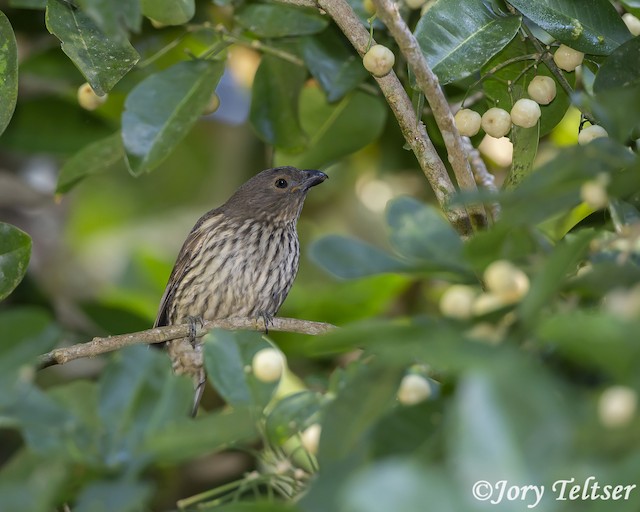
Tooth-billed Bowerbird
Scenopoeetes dentirostris
Golden Bowerbird
Prionodura newtoniana
Australia's smallest bowerbird and the only species to build a maypole bower. The male's golden plumage glows in the dim understorey of mountain rainforest above 900 m.
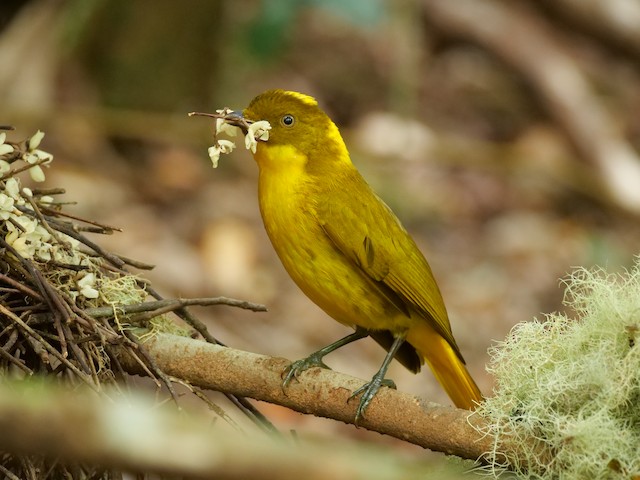
Golden Bowerbird
Prionodura newtoniana
Chowchilla
Orthonyx spaldingii
A loud, skulking ground-dweller whose dawn chorus of ringing calls is one of the signature sounds of the Wet Tropics. Forages by flicking leaf litter with powerful legs.
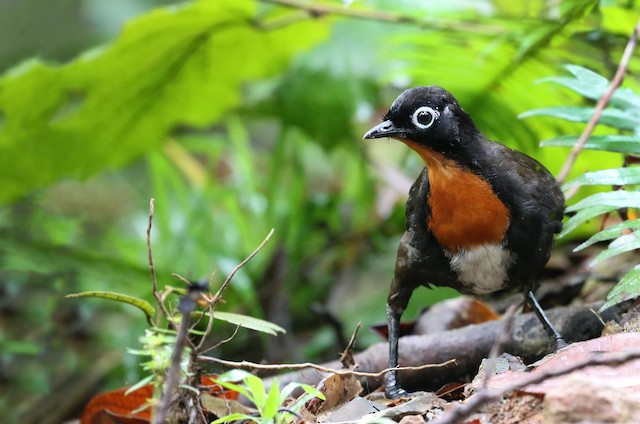
Chowchilla
Orthonyx spaldingii
Fernwren
Oreoscopus gutturalis
A tiny, secretive insectivore of mossy mountain rainforest. Creeps mouse-like through fern tangles and root masses, most reliably detected by its high-pitched descending song.
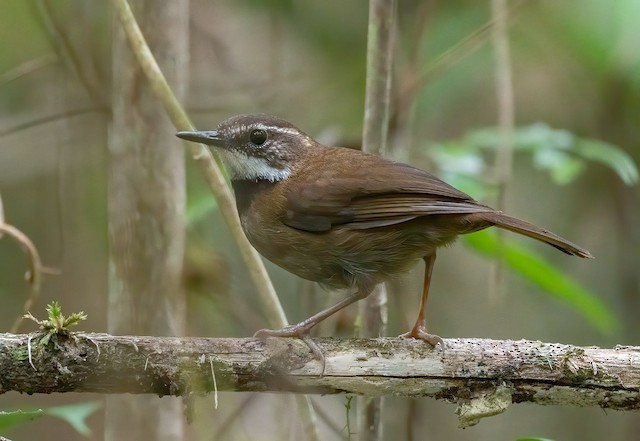
Fernwren
Oreoscopus gutturalis
Mountain Thornbill
Acanthiza katherina
Restricted to rainforest above 600 m. Forages actively in the canopy and mid-storey, often joining mixed feeding flocks with gerygones and fantails.
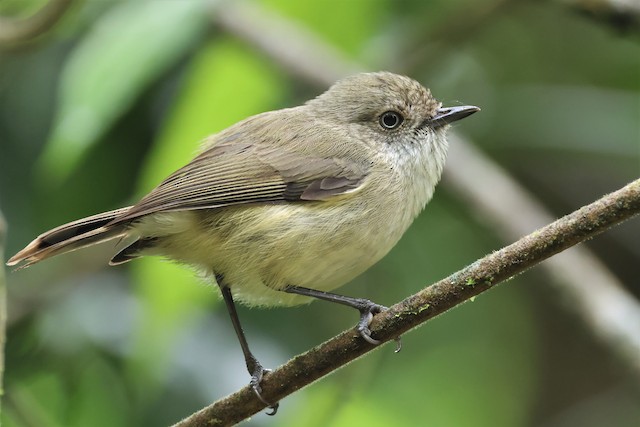
Mountain Thornbill
Acanthiza katherina
Atherton Scrubwren
Sericornis keri
A ground-hugging skulker of upland rainforest. Very similar to the Large-billed Scrubwren but restricted to the Wet Tropics above 600 m.
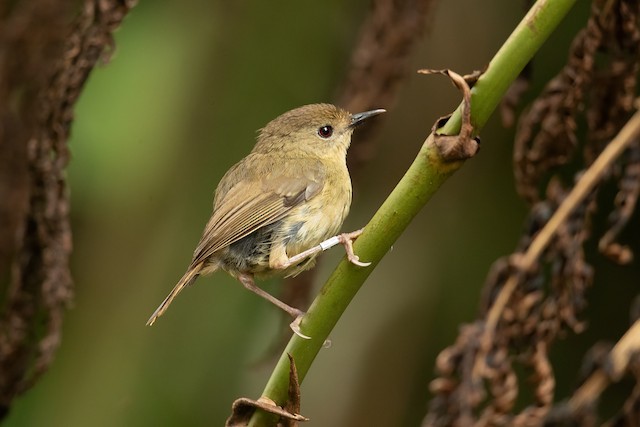
Atherton Scrubwren
Sericornis keri
Macleay's Honeyeater
Xanthotis macleayanus
A common and conspicuous honeyeater of Wet Tropics gardens and rainforest edges. Bold yellow facial streaks and an assertive, chattering call make it easy to identify.
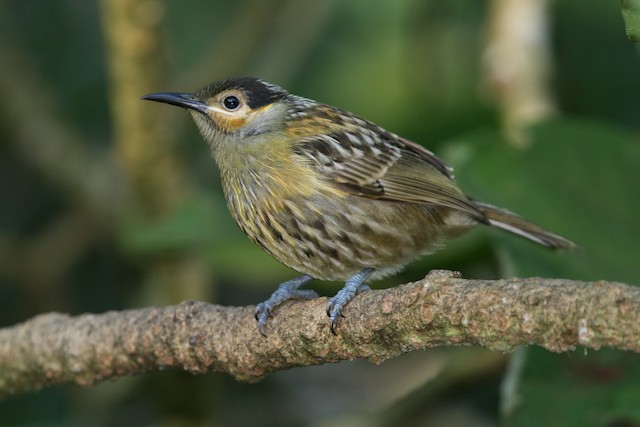
Macleay's Honeyeater
Xanthotis macleayanus
Bridled Honeyeater
Bolemoreus frenatus
An upland specialist often seen at flowering trees and shrubs above 600 m. The yellow 'bridle' mark behind the eye is diagnostic.
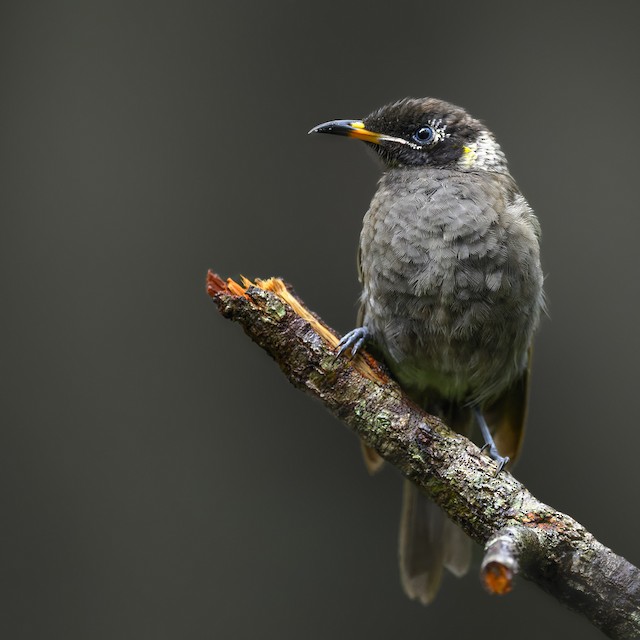
Bridled Honeyeater
Bolemoreus frenatus
Bower's Shrike-thrush
Colluricincla boweri
A rich-voiced upland relative of the Grey Shrike-thrush. Forages methodically through the mid-storey and is often located by its melodious, far-carrying song.
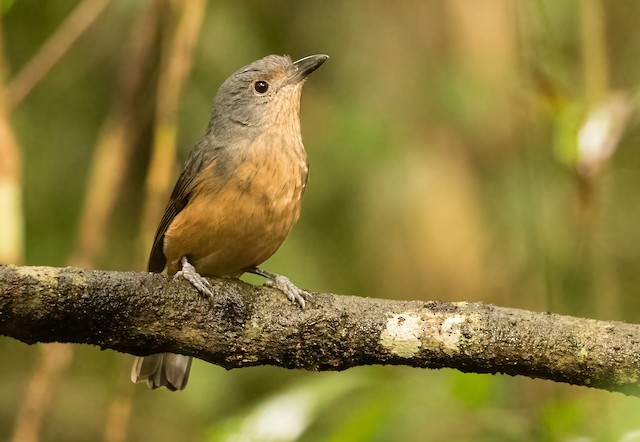
Bower's Shrike-thrush
Colluricincla boweri
Victoria's Riflebird
Ptiloris victoriae
The smallest of Australia's three riflebirds. Males perform a spectacular spread-wing courtship display on elevated perches. Females and juveniles forage quietly on tree trunks.
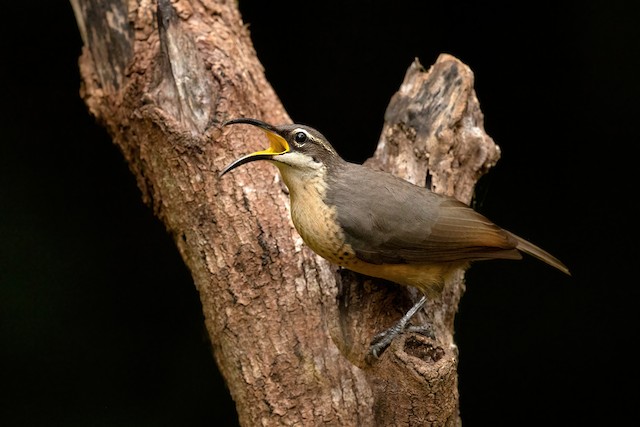
Victoria's Riflebird
Ptiloris victoriae
Pied Monarch
Arses kaupi
A striking black-and-white flycatcher that spirals up tree trunks gleaning insects, often flashing its erectile white nape ruff. Found in lowland and mid-altitude rainforest.
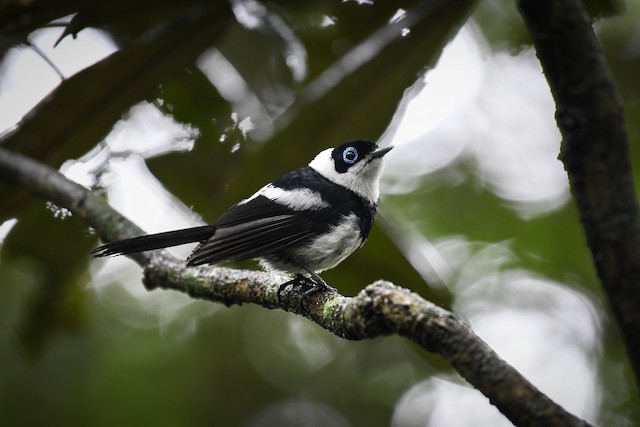
Pied Monarch
Arses kaupi
Grey-headed Robin
Heteromyias cinereifrons
A quiet, confiding robin of the upland rainforest floor. Perches low and drops to the ground to snatch invertebrates, often allowing close approach.
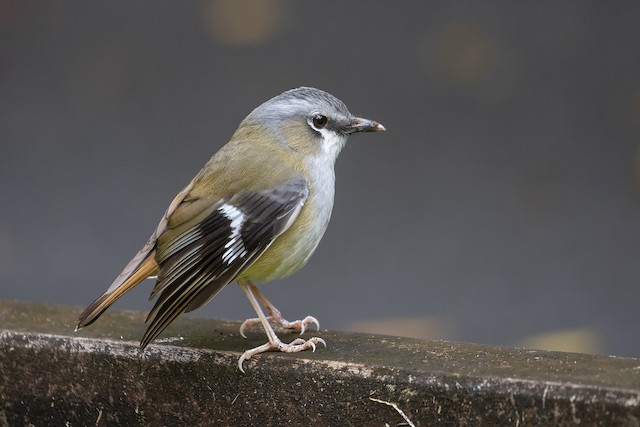
Grey-headed Robin
Heteromyias cinereifrons
Lesser Sooty Owl
Tyto multipunctata
A nocturnal specialist of dense upland rainforest. Its eerie descending shriek is often the only sign of its presence. Spotlighting on calm nights offers the best chance.
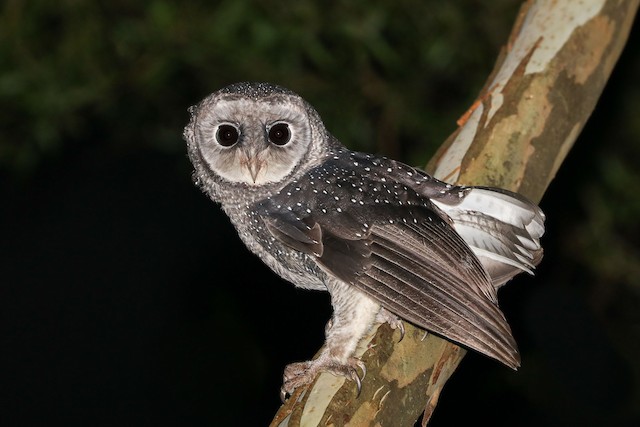
Lesser Sooty Owl
Tyto multipunctata
Buff-breasted Buttonquail
Turnix olivii
One of Australia's rarest and most elusive birds. Inhabits dry rainforest and vine thicket on the western margin of the Wet Tropics. Virtually never seen; presence often inferred from circular scratchings called platelets.
No photo available
Buff-breasted Buttonquail
Turnix olivii
Wompoo Fruit-Dove
Ptilinopus magnificus
A large, stunningly colourful fruit-dove whose deep resonant "wompoo" call carries through the canopy. Despite vivid plumage, it can be surprisingly hard to spot among foliage.
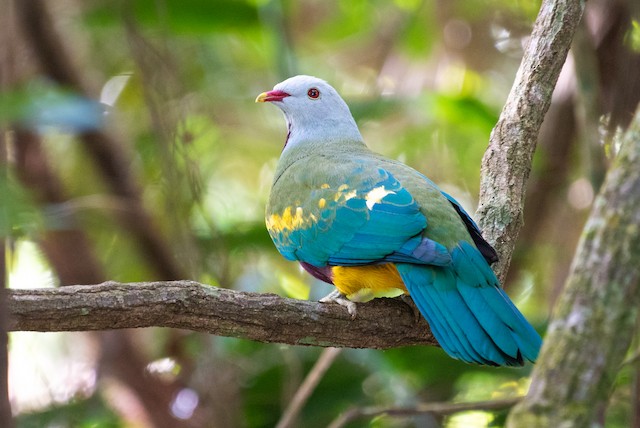
Wompoo Fruit-Dove
Ptilinopus magnificus
Join a Guided Expedition
8 days. Around 250 species, including all 15 endemic targets. Maximum 6 guests. Led by Clayton Smith, who has spent over 20 years birding these rainforests.
View Expedition Details →What's Being Seen Right Now
Recent reports from the Wet Tropics birding community.
Atherton Scrubwren
Sericornis keri
Chowchilla
Orthonyx spaldingii
Pied Monarch
Arses kaupi
Bridled Honeyeater
Bolemoreus frenatus
Fernwren
Oreoscopus gutturalis
Chowchilla
Orthonyx spaldingii
Golden Bowerbird
Prionodura newtoniana
Bridled Honeyeater
Bolemoreus frenatus
Atherton Scrubwren
Sericornis keri
Based on recent eBird reports. Sightings are community-reported and not guaranteed.
Updated 7 Mar 2026, 02:19 am · Data: eBird/Cornell Lab of Ornithology
Every Season Brings Something Different
There's no bad time to bird the Wet Tropics. There are different times. The dry season brings clear mornings and active bowerbird displays. The wet season delivers breeding plumage, nesting behaviour, and summer migrants from New Guinea and the Torres Strait.
Vagrants turn up without warning. A rare migrant appears over the Tablelands. A seabird gets pushed inland by a cyclone. The feed above gives you a sense of what's happening right now, but conditions change week to week, and the real picture comes from being on the ground every day.
This is a place worth returning to. I've been doing it for twenty years and the list keeps growing.
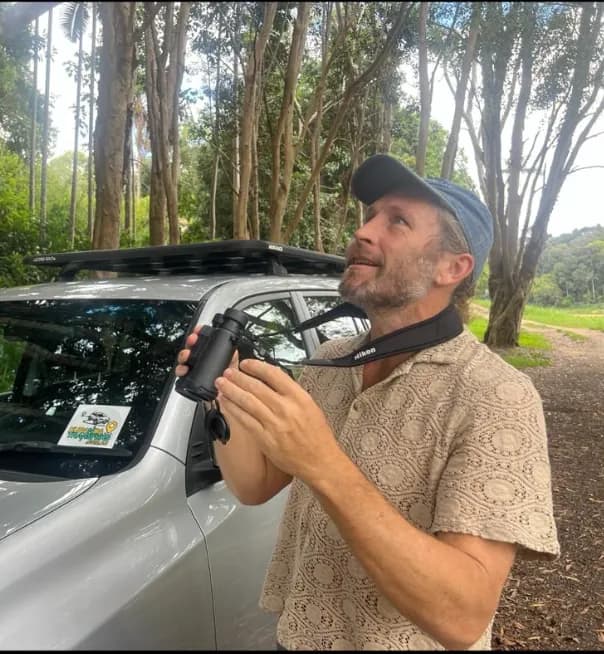
Your Guide
Clayton Smith
I've spent twenty-odd years in these rainforests. The Wet Tropics got under my skin early. The dawn chorus at Lake Barrine, a Golden Bowerbird glowing in the understorey, the Lesser Sooty Owl dropping its bloodcurdling screech into the dark at midnight. Once you've seen it, you don't leave.
I was a finalist in the Cairns Tourism Awards, which was a nice recognition, but what I actually care about is putting people in front of the birds they've travelled halfway around the world to see. I know where these species are, I know their rhythms, and I know how to read the conditions on any given morning.
Our flagship is the 8-day expedition targeting around 250 species, including all 15 Wet Tropics endemics, across the full elevational gradient from coastal lowlands to the mountaintops. We search rainforest river systems for platypus, spend nights at altitude for the mammals no other operator is targeting, and sweep for anything missed on the final day.
- 20+ years guiding in the Wet Tropics
- Swarovski ATX optics provided for digiscoping
- Maximum 6 guests per expedition
- English and German spoken
Planning a birding trip to the Wet Tropics?
Tell us your target species and upload your eBird life list so we can identify exactly which endemics you still need.
We'll run a gap analysis against the 15 Wet Tropics endemics and build an itinerary around the species you're missing.